About
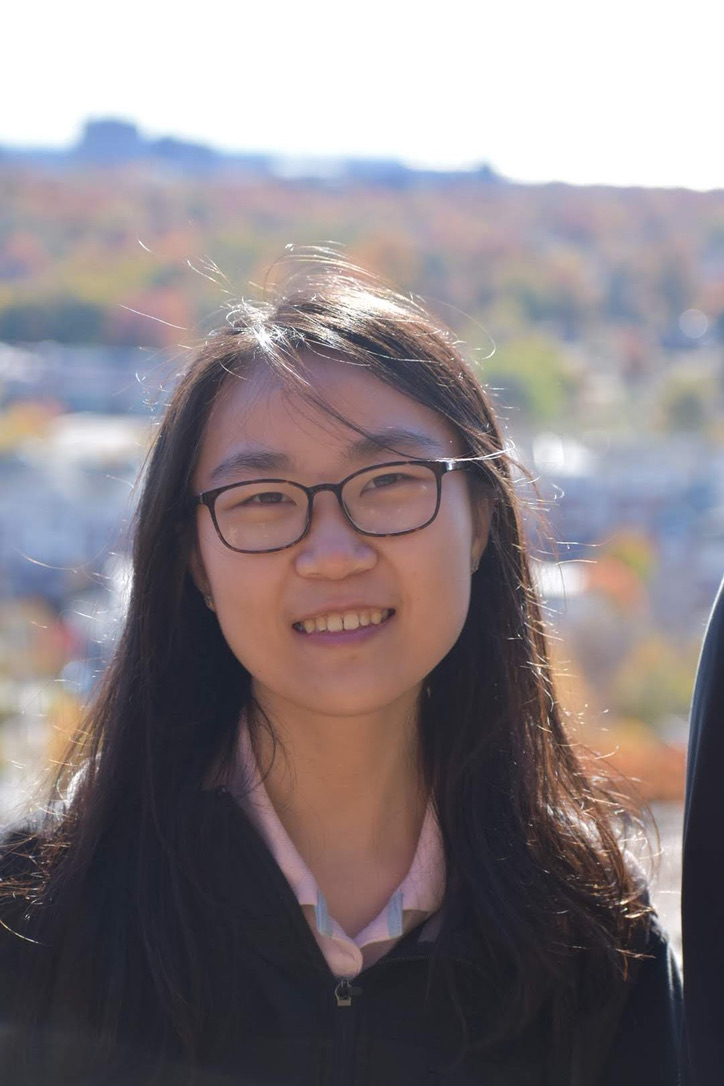
Hi, I’m Liu Yang, working on building a programmable serving system for custom inference logic, stateful agents, and serving-side optimization. Please do checkout our work and star if you find it interesting/helpful!
I recently graduated from Yale University with a combined B.S./M.S. in Computer Science and a B.A. in Intellectual History! At Yale, my technical work focuses on the intersection of theoretical foundations and practical applications, with a particular interest in building scalable, efficient, and reliable systems. I am currently exploring this through research in LLMs for parallel code generation with Professor Quanquan Liu and collaboration with Google DeepMind, as well as in quantum error correction with Professor Lin Zhong and Dr. Yue Wu. My research has been recognized with a CRA Outstanding Undergraduate Research Award Honorable Mention (2025), the Rosenfeld Science Scholars Fellowship (2025), First Place at the Yale Undergraduate Research Conference (2026), and a First-Year Summer Research Fellowship in the Sciences and Engineering (2023).
Previously, I competed in the Singapore Physics Olympiad and was a member of the IPhO national training team. I also captained the Singapore national team for the (Online) International Young Physicists’ Tournament (IYPT), achieving Champion in world final, and later returned as the main coach for the national team in 2022.
Beyond Computer Science, I have a broad interest in intellectual history, specifically the history of science and political philosophy in the early modern period. I have recently been reading Galileo, Hobbes, and Foucault, and I am currently writing my History Senior Essay on the definition, presence, and concerns regarding artificial intelligence in Western and Chinese science fiction from 1920 to 2003. My thesis focuses on R.U.R. by Karel Čapek, Metropolis by Fritz Lang, Lei Ren by Wang Jinkang, and the Xiaolingtong Trilogy by Ye Yonglie. This research has deeply informed my perspective on the cultural inheritances shaping our attitudes toward artificial life, and consequently, my views on AI safety and alignment. Ultimately, the fiction of the machine-human teaches us that when we engineer artificial life, we are not creating an alien other. We are building a mirror. How we choose to treat that reflection—with the panicked violence of human exceptionalism or the radical care of a shared cosmology—will determine the future of intelligence itself.
I am working in the AI startup space. If you know of any exciting opportunities—or if you simply want to discuss intellectual ideas across the sciences and humanities—please feel free to email me!
You can also follow my writings on my Substack.
Education
- B.S./M.S. in Computer Science and B.A. in History, Yale University, 2022 – Present
- Singapore-Cambridge GCE A-Level, Raffles Institution, 2020 – 2022
Publications & Ongoing Projects
ParEVO: Synthesizing Code for Irregular Data: High-Performance Parallelism through Agentic Evolution Liu Yang, Zeyu Nie, Andrew Liu, Felix Zou, Deniz Altinbüken, Amir Yazdanbakhsh, Quanquan C. Liu
Preprint | [Website] [Code]
Parallel Minimum-Weight Parity Factor Decoding for Quantum Error Correction Liu Yang, Yue Wu, Lin Zhong
IEEE QCE 2024 Poster
Fractional magnetic charges and channeling of Faraday lines by disclinations in artificial spin ice Anthony Hurben, Yinchen Hao, Ioan-Augustin Chioar, Liu Yang, Nanny Strandqvist, Michael Saccone, Nicholas S. Bingham, Justin Ramberger, Chris Leighton, Cristiano Nisoli, Peter Schiffer
Proc. Natl. Acad. Sci. U.S.A. 2025
Theoretical and experimental studies of the Wilberforce pendulum Qinghao Wen*, Liu Yang* European Journal of Physics 2021
*Contributed equally
Nonlinear dynamics and onset of steady precession of a ring on a vertical rod Xinrui Li, Shanay Jindal, Liu Yang Phys. Rev. E. 2024
Miscellaneous
- I grew up in Hubei, China, and studied in Singapore at Raffles Institution before coming to Yale.
- I greatly enjoy reading the works of Rousseau and Hobbes. Though their perspectives often contradict one another, they complement each other in surprisingly numerous ways.
- I recently came across the excellent book Leviathan and the Air-Pump by Steven Shapin and Simon Schaffer—highly recommended! The debate between Robert Boyle and Thomas Hobbes on methods of knowledge production gets to the core of my intellectual curiosity over the years. I am actively seeking a balanced point between Boyle’s empiricism and Hobbes’s emphasis on logic and rationalism.